About Me

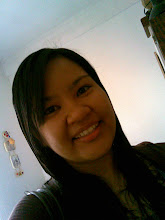
My photo
Hello World... My name is Laurence Cambe. I am a student of the Northern Marianas College and now in my senior year. I was born and raised on this tiny island called Saipan. Although, it may seem so far away from the real world, I believe it is one of the most beautiful places to be on. I am now a Full Time Educator at William S. Reyes Elementary School, although, I am looking forward to my graduation this May. I hope you enjoy my blog...

ED 492 Slide Share

Monday, April 13, 2009

Message from Ms. Laurence...


To Mrs. Dorina....
I would like to say Thank You... I can not say how grateful I am for having you as a master teacher. We were partners that had great minds that think alike, we shared stories not only about school life but everything and anything and we were just like sisters. Throughout the experience of student teaching, I found every minute and second in your classroom wonderful and unforgettable. I thank you for all your advices, concerns, teachable moments, laughters, and of course helping me pick up my head when people put me down. No more words can be said or written to show you how thankful I am for this wonderful experience...

A Teacher for All Seasons

A teacher is like Spring,
Who nurtures new green sprouts,
Encourages and leads them,
Whenever they have doubts.

A teacher is like Summer,
Whose sunny temperament
Makes studying a pleasure,
Preventing discontent.

A teacher is like Fall,
With methods crisp and clear,
Lessons of bright colors
And a happy atmosphere.

A teacher is like Winter,
While it’s snowing hard outside,
Keeping students comfortable,
As a warm and helpful guide.

Teacher, you do all these things,
With a pleasant attitude;
You’re a teacher for all seasons,
And you have my gratitude!


To my Aides Mr. Q and Mr. Roque...
How can I ever thank you for making my lesson flow and life within the classroom less of pain in the ... You guys were my body guards and my life savers for all the trouble and naughtiness that the kids brought you were always there to help me. I thank you and I hope to see you in my own classroom in the near future...


To my unexplainable KINGFISHERS...
Ms. Laurence can not find the words to thank you for "always" being at your best behavior and for "always" doing your work. You guys are the sunshine that light my day in my experience as a teacher in training. You made me look forward to coming to class everyday and to expect the unexpected... I could not ask for a better class but yours... It is each one of you who made the difference in my experience and who brought out the "EDUCATOR" in me. I will truly miss you KINGFISHERS!! Always remember that Ms. Laurence is always around and to always AIM HIGH and FLY HIGH!!!

To the one and only.... (Ms. Pam)
To this wonderful lady who made this experience one that I will always remember because of her hard work in pushing me, advising me, and helping me with all my problems you are the one who I would like to "THANK" and who I would like to give my diploma too because you got me to finish one of my biggest goals in life. I thank you and I know you know how grateful I am to have you as my supervisor...

I'll Remember You Always

Rarely does someone
get to influence a person's life
in a positive way
for a lifetime,
as a teacher can,
fostering optimism and confidence,
providing knowledge that leads to success,
and being a good role model,
as you have,
and you are,
and you will...
forever.
I'll remember you always.
Thank you.

... The very Beginning ...

My adventure and wonderful experience with student teaching began January 05, 2009. For the first two weeks I came to C-4 already very excited. However, I was only there to do observations. I couldn't help myself but I had to interact with this kids. I had to help them and introduce myself. They were the 1st graders that were very welcoming. Within the first two weeks I got to know my students and master teacher very well. I got to interact with them, experience their routines and procedures and classroom management. During the first two weeks I got to see how my students behave and how well my master teacher was not only in teaching but as well as managing the class and this is how and why I learned so many things from her..

... Taking Over ...

From January 19-January 23, 2009, I finally began to take charge. I first began taking over during the morning routines and started working with small groups. I got to handle the class for about the first 45 minutes of class and then during Math. The first few days of taking over were very tense for me. I was very nervous and very scared as to how the kids would treat me but everything turned out well and I managed to survive. Each day I would go back and think what could I have done better and what do I need to change.

Then I slowly began to work with my small groups. With my small groups I worked with students that were struggling with lessons. I soon began taking over doing 3 hours of lessons. I was beginning to get a hang of all the routines and procedure, using my firm teacher voice and management with students that misbehaved, and facing the tantrums and testing of my students.

Beginning February 23rd I took over the class for the start of my 6 weeks of full days. I would say at the very beginning I was very concerned with time management because I had so little time to do everything. I needed to check homework books within my prep time, prepare homework assignments, prepare materials for the next lesson and to top it off it seemed as if time flew by so fast. My full days were full of excitement and unforgettable moments especially when there is a problem with a student. However, I am amazed I got to finish it off still surviving and still knowing that my students learned so much from me and that they appreciated every teaching moment with me.

... Transition??? ...

My transition week was to take place beginning April 06 - 18. However, unexpected events occur in everyone's life. Sadly, I did not get to do the full 2 weeks of transitioning my class back to their teacher. My transitioning did not take place because I was offered a job with the school (William S. Reyes Elemen. School). I began with my very own classroom beginning April 01, 2009. Moreover, I really did look forward to ending my student teaching by completing the whole practicum and ending by transitioning slow the class to the teacher but like they say expect the unexpected...

Lessons and Activities that demonstrate the value of DIVERSITY

Science Fair Project


Layers of the Rainforest (Diorama)


Caterpillar Skip Counting


Creating a Nest (Habitat of Birds)


Field Trip to the Zoo (Mammals/Reptiles/Birds)


Flag Ceremony (Taking Charge)


Family Tree (Project)


Health and Wellness (Physical Education)

Assessment Tools

1. Teacher Made Quizzes/Tests - written or oral assessments that are not commercially produced or standardized. In other words, a test a teacher designs specifically for his or her students.

2. Star Reading and Math - is a quarterly progress monitoring software assessment in wide use by primary and secondary schools for monitoring the practice in reading and math. The software provides additional information to teachers regarding reading and math rates, amount of reading, and other variables related to math and reading.

3. Reading First Assessment (RFA) - RFA is an ongoing assessment tool used to monitor the students reading level and progress with alphabet sounds, recognizing alphabets, blending, phonemic awareness etc.

3. Portfolios - a collection of student work gathered for a particular purpose that exhibits to the student and others the student's efforts, progress or achievement in one or more areas.

4. Performance Tasks - encompass many skills and usually have a direct application to real tasks people are asked to do in everyday life.

5. Learning Logs -consist of short, objective entries that contain mathematical problem-solving entries, observations of science experiments, questions about the lecture or readings, lists of outside readings, homework assignments, or anything that lends itself to keeping records. Often the responses in these logs are usually brief, factual, and impersonal.

6. Journals - usually written in narrative form, are subjective, and deal more with feelings, opinions, or personal experiences. Journal entries are usually more descriptive, longer, open-ended, and free flowing than logs. They are often used to respond to pieces of literature, describe events, comment on reactions to events, reflection on personal experiences and feelings, and connect what is being studied in one class with another class or with life outside the classroom.

7. Individual/ Group Presentation - students are assessed based on given criteria to with the outcome of the final product.

8. Observation- assessment may also be done with observation during the time when students are working, presenting, or orally participating during a discussion.

Relevance to Student Learning

1. School Walk-A-Thon - Students were able to raise money to for the use of maintaining the buildings of our school, to buy school supplies, etc. Students walked around our school field to show their support for our school and the money they raised for the school.

2. Physical Education - Physical Education plays an important role at our school. We are very concerned with our students Health and Wellness. In order to promote health and wellness we have our students go out to the playground or field for FIELD DAY. During field day the kids are able to play and exercise.

3. Field Trips - During our field trip students were able to simulate with the actual animals they have been learning about (BIRDS, MAMMALS, and REPTILES) at the Saipan Zoo.

4. Tsunami/Fire Drill - Students were able to use their Fire Drill and Tsunami Drill knowledge by actually being involve in our school Tsunami and Fire Drill. The students were able to demonstrate what to do if it were to be in an actual event.

5. Family Fun Night - Students were able to raise money for their grade level and for the school. They were able to create booths with games, food, etc. Students were also able to bring out their families to share entertainment that the school has prepared.

6. Read-A-Thon - Our school Read-A-Thon enables the students to read at home and to develop their reading skills not only at home. A student is acknowledge for reading the most books and for spending the most time reading at home.

7. Pennies for Peace - The students of William S. Reyes participated in the Pennies for Peace to raise money to help built schools in the Middle East. The students were able to help other children by helping them built a place to learn.

Technology in the Classroom

1. Computers - the computer in the classroom was used to print out student worksheets, parent letters, etc.


2. Over Head Projectors - the overhead projector was used to project our writing competition piece, watch movies, problems for our math review game, and for students to practice note taking.

3. Lap Top - our lap top in our classroom was used to play movies such as the REPTILES, MONEY dvd and also to play music for our commercial breaks.


4. CD Player - our CD player was used to practice our dance for the flag ceremony we were in charge of.

5. Camera - the camera was used to document special events or activities that happened at the school and in our classroom. (EX. Walk-A-Thon, Class Projects and Flag Ceremony)

Professional Growth

1. Statewide Professional Development - During the Statewide Professional Development I was able to attend two different sessions. The first session I attended was on Classroom Management for Students with Disabilities and the focus for the second session was on Integrating Art with the Science Curriculum.

2. School Level Professional Development - During our School-Level Professional Developments I am able to develop my skills in different areas such as working with the Accreditation Leadership Team, enhance my skills dealing with the Science Curriculum, using a Fire Extinguisher, etc. These Professional Developments are held every last Wednesday of the month.

3. Staff Meeting - During our staff meeting we are able to discuss upcoming events with our fellow teachers and staff, school problems, accreditation matters, etc. Staff meetings are called by the Principal or are announced in our weekly bulletin.

4. Parent Teacher Association (PTA) Meeting - During our PTA meeting we are able to discuss and interact with parents upcoming school events, school problems, fundraisers, and student achievements and goals. Our school PTA meetings are held one every month.

5. Report Card Day - Report Card Day was one of the experiences where I got to interact with my students parents. I had the opportunity to discuss my students grades and problems within the classroom.

Behavior Management and Strategies

1. Name on Board- this behavior management strategy is used by writing the student's name on the board when he/she misbehaves in class. During the first warning, the student's name is written on the board, if given a second warning a check mark is placed next to the student's name. If the student continues to misbehave he/she is given a third warning (check mark) and is given time out.

2. Time Out- time out is a management behavior strategy used for students who misbehaves and surpasses the given warnings. Students are given time out by facing the wall or spending their recess time inside the classroom.

3. Rhythmic Clapping- rhythmic clapping is a management strategy in which the teacher claps a rhythm and the students repeat the rhythm by re-clapping it. This manage strategy grabs the attention of students when they are talking too loud, off task, ready to transition, etc.

4. Transitional Songs- transitional songs are used by the teacher calling out a title of a transitional song that the students know when it is time for them to transition from one work to another.

5. Hand Signals- hand signals are used within the classroom in order to lessen the calling of the teacher's name. 1-Drink water 2-Restroom 3-Sharpen Pencil 4- Need Help 5-Throw Trash. Each student is to call the teacher's name once and show the hand signal.

6.Prizes- prizes are given anytime. They may be used for excellent behavior, outstanding or creative work, games, or when the teacher thinks that the students deserves one.

Teaching Methods and Strategies

1. Mini Lecture- mini lecture is a concise way to provide participants with background information, research findings, or motivational examples to spark interest and give them a framework for discussion or activity to follow. Mini-lectures should be brief and targeted, setting up an activity or discussion.

2. Experiments and Demonstration- demonstrations and experiments can be used to show how something works or why something is important. These activities also provide a way to show the correct process for doing something, like a procedure. They should be carefully planned and conducted. They often involve the use of supporting materials.

3. Games and Puzzles- games and puzzles can be used to provide a different environment in which learning can take place. They can also be used in cooperative learning groups. Many types of games and puzzles can be adapted to present and review concepts. They can also be used for review, reinforcement, critical thinking, problem solving, and decision making. Watch the competitiveness, as this is a learning tool to be used as for fun.

4. Student or Participant presentations - Individual students or groups of participants can present information to teh rest of the class. be sure to have clear guidelines for participants to follow, including time, and objectives. This strategies also goes very well with adult learning theory, teach other for retention.

5. Artistic Expression - Participants may be offered a choice of expressing themselves in art, or through writing. Such a choice accommodates the different learning need and talents of students. Completed work should be displayed.

6. Simulations - a simulation is an activity structured to feel like a real experience. participants are asked to image themselves in a situation, or they play or structured game or activity that enables them to experience a feeling that might occur in another setting. The power of a situation is that the students, participants FEEL the experience. Simulations need to be discussed immediately after the experience.

7. Creative Writing - this strategy can take many forms, from poems, stories, written role play (scripted) journal written reflective thoughts. They can be shared or not. This form gives participants a creative outlet to the subject taught or discussed. One can also see transfer learning happen in this form of expression.

8. Cooperative Group Work- cooperative group work is a special form of small group work. All small group activities are not necessarily cooperative groups for a group to be cooperative, a "sink or swim together" mentality must be created. Students, participants work in small heterogeneous groups (2-6 members) where each member is accountable not only for his learning (or task completion) but for helping other members of the group do the same thing. For a group to be cooperative, a sense of positive interdependence among the group members must be established. Cooperative-learning situations promote the development and practice of higher-level reasoning, critical thinking, decision making, problem solving, communications, and interpersonal skills.

9. Media Analysis- participants can analyze materials from a variety of media, including the net, music, newspapers, etc. Such analysis might include the purpose of the piece, the target audience, underlying messages, motivations, and stereotypes.

10. Continuum Voting- continuum voting is a stimulating discussion technique. Students, participants express the extent to which they agree or disagree with a statement read by the leader. The room should be prepared for this activity with a sign that says agree on one wall, and a sign that says disagree on the opposite wall. There should be room for participants to move freely between the 2 signs. As the leader reads the statement, the participants move to a point between the signs that reflects their thoughts or feelings. A position in the middle between the two signs indicate a neutral stance.

11. Class Discussion- a true discussion occurs when a group of people including the leader, shares experiences, debate ideas and theories, discuss experiences, and work together on common problems. It is not clear:a teacher asks a question and a participant answers. Class discussion can be used to initiate, amplify, or summarize a session.

12. Journal Writing- journal writing affords the opportunity to thinking and writing. Expressive writing requires that participants become actively involved in the learning process. This process becomes less effective if participants need to worry about spelling or grammar. Students should be encouraged to write freely in their journals without fear of evaluation.

13. Self-Assessment- personal inventories provide a tool for self-assessment. Providing privacy around personal assessments allows the participants to be honest in their responses. Volunteers can share answers or the questions can be discussed in general, but no participants should have to share answers they would prefer to keep private.

14. Small Groups- participants working together can help simulate each others creativity. Small group activities are cooperative, but have less formal structure then cooperative learning. These activities encourage collective thinking and provide opportunities for participants to work together and increase social skills.

15. Celebrations- activities that focus on the joy of completion and accomplishment. These activities serve as reminders and markers. It is appropriate to stop and acknowledge and appreciate their accomplishments.